
End Trucks: Essential Components for Efficient Overhead Crane Systems
End Trucks

Picture a massive steel beam gliding smoothly across a factory ceiling, delivering raw materials precisely where workers need them. End trucks make that precision possible. These critical components drive overhead cranes, ensuring safe and reliable material handling in demanding industrial environments.
What Are End Trucks?
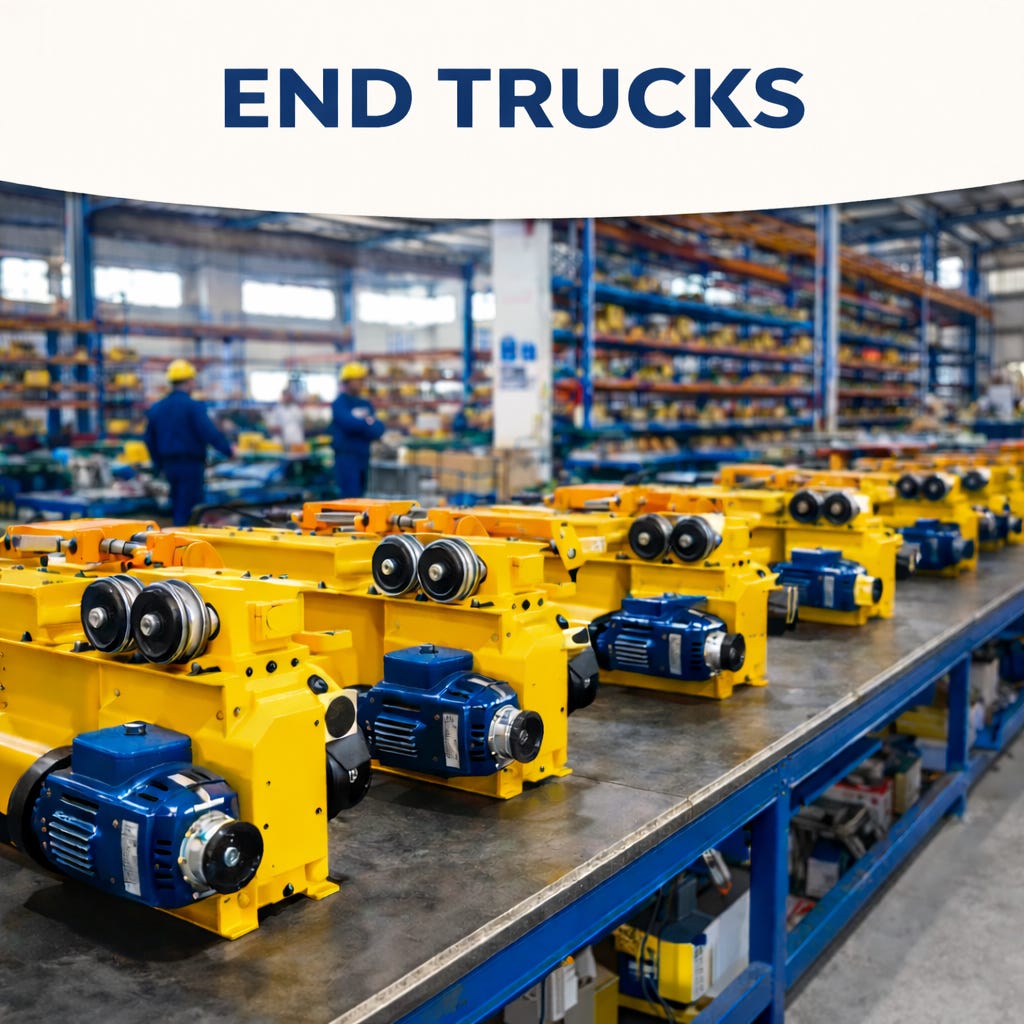
End trucks form the foundation of overhead crane mobility. Mounted at each end of the crane bridge, they house wheels, motors, and controls that allow the entire bridge to travel along runway beams.
These assemblies support heavy loads while navigating long spans in factories, warehouses, and ports. Their design directly impacts crane speed, stability, and lifespan.
Engineers classify end trucks as either motorized or manual, with motorized versions dominating modern applications for automation and efficiency.
Types of End Trucks
Crane operators choose end truck types based on span length, load capacity, and duty cycle. Each variant suits specific industrial needs.
Box-Type End Trucks
Box-type end trucks excel in double-girder cranes and gantry systems. Their enclosed structure provides superior rigidity for spans over 50 feet and capacities exceeding 50 tons.
Fabricated from welded steel plates, these trucks resist twisting forces common in steel mills and shipyards. They integrate seamlessly with high-torque drives for smooth operation.
Weldment End Trucks
Weldment designs use cast or fabricated frames for lighter-duty applications. Cost-effective and customizable, they suit single-girder cranes under 20-ton ratings.
These trucks feature bolted components for easy maintenance. Operators in smaller warehouses appreciate their quick installation and lower upfront costs.
Wheel Block End Trucks
Wheel block assemblies prioritize modularity. Separate wheel blocks connect to carriages, allowing flexibility in track gauges and beam sizes.
This type shines in custom crane builds. Maintenance teams swap worn blocks without dismantling the entire truck, minimizing downtime.
Key Components of End Trucks
Understanding internal parts helps maintenance teams extend equipment life. End trucks integrate several precision-engineered elements.
Drive motors power wheel rotation, typically AC or DC variable frequency drives for precise speed control. Gearboxes reduce motor speed while amplifying torque.
Load-bearing wheels, often forged steel, roll on runway rails. Flanged designs prevent derailment, while V-groove options suit curved tracks.
End stops and bumpers absorb impacts at runway ends. Electrical controls, including limit switches, ensure safe operation within defined zones.
Functions and Benefits
End trucks perform vital roles beyond simple movement. They stabilize the crane bridge under dynamic loads.
Precise Load Positioning
Smooth rail travel enables operators to spot loads within inches. This accuracy boosts productivity in assembly lines and reduces material damage.
Variable speed controls match travel rates to lifting operations, preventing sway.
Enhanced Safety Features
Built-in brakes engage instantly during power loss. Overload sensors and anti-collision systems protect workers and equipment.
Durable construction withstands daily stresses, lowering accident risks.
Operational Efficiency
End trucks cut cycle times by 20-30% compared to older designs. Integration with automation systems supports 24/7 operations in logistics hubs.
Energy-efficient motors reduce utility costs over time.
Applications Across Industries
End trucks power cranes in diverse sectors. Their versatility drives adoption in high-volume environments.
Manufacturing Facilities
In automotive plants, end trucks transport engine blocks and chassis along production lines. Precision movement synchronizes with robotic welders.
Steel fabricators rely on them for coil handling, where heavy-duty models manage 100-ton loads effortlessly.
Construction Sites
Gantry cranes with rugged end trucks navigate uneven terrain. They position rebar bundles and precast panels exactly, accelerating builds.
Outdoor durability handles wind and dust exposure.
Warehousing and Logistics
High-bay warehouses use end trucks for pallet stacking up to 40 feet. They integrate with AS/RS systems for automated retrieval.
Port facilities move containers efficiently, maximizing throughput.
Maintenance Best Practices
Proactive care extends end truck life to 15-20 years. Follow structured routines for reliability.
Daily Inspections
Check wheels for flat spots and rail wear. Listen for unusual drive noises indicating lubrication issues.
Verify electrical connections and brake function.
Scheduled Servicing
Lubricate bearings quarterly using manufacturer-specified greases. Align wheels to rails within 1/16-inch tolerance.
Replace worn tires before tread depth drops below minimums.
Common Troubleshooting
Vibration signals misalignment—shim trucks as needed. Slow speeds point to gearbox problems; inspect seals promptly.
Overheating motors require ventilation checks and load audits.
Selecting the Right End Truck
Key factors guide purchasing decisions. Match specs to operational demands.
Capacity: Rate for maximum wheel loads, adding 25% safety margin.
Span and Speed: Longer spans need stiffer designs; aim for 100-200 fpm travel.
Environment: Corrosion-resistant coatings suit wet areas.
Consult load charts and simulate cycles. Partner with reputable suppliers like BW Crane for custom solutions.
Innovations in End Truck Technology
Modern designs incorporate smart features. IoT sensors monitor vibration and temperature in real-time.
Variable frequency drives (VFDs) enable soft starts, slashing mechanical wear. Energy regenerative braking recaptures power during deceleration.
Lightweight composites reduce dead weight, boosting crane capacity without structural upgrades.
Cost Considerations
Initial prices range from $5,000 for basic weldments to $25,000+ for heavy-duty box types. Factor in installation and warranties.
ROI emerges through downtime savings—well-maintained trucks pay for themselves in 2-3 years via higher throughput.
Compare total ownership costs, not just upfront bids.
Safety Standards and Compliance
OSHA mandates end truck features like guards and emergency stops. ASME B30.2 governs overhead crane design.
Annual inspections by certified riggers ensure code adherence. Non-compliance risks fines and shutdowns.
Future Trends
Automation integrates end trucks with AI pathfinding. Drones assist in rail inspections, cutting manual labor.
Sustainable materials and electric drives align with green initiatives. Expect modular “plug-and-play” designs for faster retrofits.
End trucks remain indispensable for material handling efficiency. Selecting durable models with modern controls positions businesses for long-term success.
Ready to upgrade your overhead crane system? Contact a certified supplier today to assess your facility’s needs and explore custom end truck solutions that drive productivity.